
Wild Ice: Natural Ice Skating on Lakes in Maine
The ice answers the morning with a sound that feels almost otherworldly—pops and pings echoing across the surface like distant signals. It’s not danger, but dialogue. As the first sunlight warms the frozen lake, the ice subtly shifts and settles, releasing its quiet music into the clear winter air.

Near Alfred, the lake lies frozen 5 to 6 inches thick, its surface smooth and glassy—every bit as pristine as a freshly Zamboni’d rink, only here the “rink” stretches for miles. Concentric rings of light and dark ice, like bullseyes etched by nature itself, ripple across the surface. They’re beautiful to behold, effortless to skate, carrying you across the lake as if you’re suspended between earth and sky, with the shoreline fading into a thin horizon.
Then, 15 miles later, snow begins to fall. Soft at first. Then steady. The ice blurs, its details gently erased. By the time you turn back, the patterns are already gone—unlikely to be seen, or skated, again. Wild ice never repeats itself. And that fleeting perfection is exactly what makes it unforgettable.
Southern Maine’s winter weather (brief warm spells followed by deep freezes) quietly shapes this ever-changing playground. With countless lakes and ponds, the ice is naturally resurfaced again and again, turning ordinary waters into glass-smooth canvases.
The only challenge is finding the right moment. For that, locals turn to the Maine & New Hampshire Skating and Ice Report, a community-powered guide to where you can experience one of Maine’s most magical winter activities.
Ice Thickness Safety: How many inches of ice is safe to walk on?
A good rule of thumb is at least 4 inches of ice for skating, with 5 to 6 inches offering a safer margin. Avoid snow-covered, white, or honeycombed ice and always steer clear of inlets, outlets, bridges and moving water.
Remember: “Thick and blue, tried and true. Thin and crispy, way too risky.”
View ice thickness reports for updated information, and learn more with these Winter Ice Safety Tips.
Pond Hockey
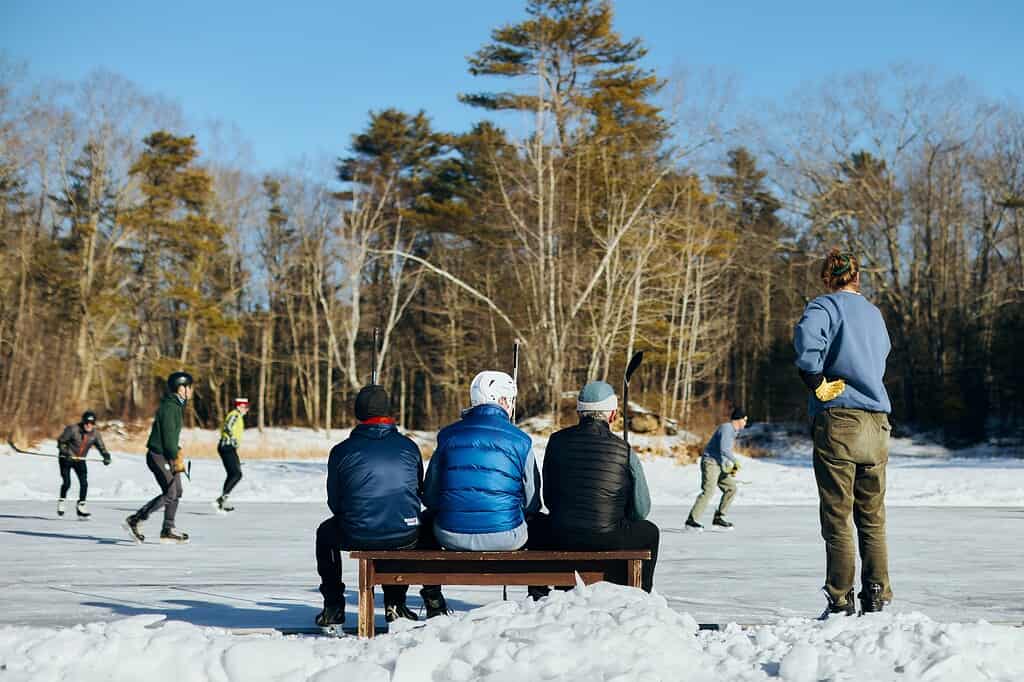
For skaters who crave motion, grit and a little friendly competition, winter’s answer is simple: pond hockey. When conditions align, frozen lakes, quiet ponds and even flooded fields transform into rugged, open-air rinks. Goals are marked with boots or buckets, lines are carved by shovels, and the game unfolds in rhythm with the wind, the cold, and the light. It’s less about the score and more about being present in the moment—moving with the season, not against it.
For those craving a little structure, Maine’s pond hockey tournaments carry the same spirit. The Maine Pond Hockey Classic in Oakland brings players together each February on hand-flooded outdoor rinks on McGrath Pond at Camp Tracy, while the Acadian Pond Hockey Classic on Long Lake in St. Agatha blends 3-on-3 competition with community, welcoming all ages and supporting youth hockey programs.
Some players take that relationship with the ice seriously. In southern Maine, dedicated groups maintain their frozen pond arenas with regular shoveling—and even the occasional Zamboni—honoring the surface as much as the sport itself.
What to Wear When Ice Skating Outdoors
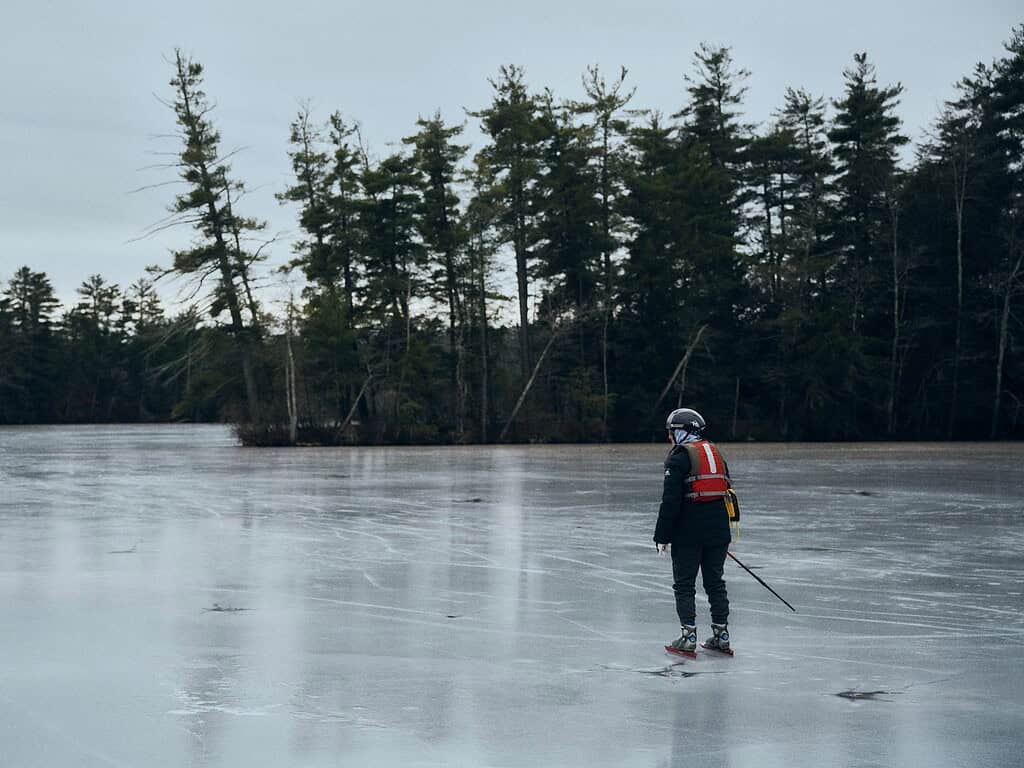
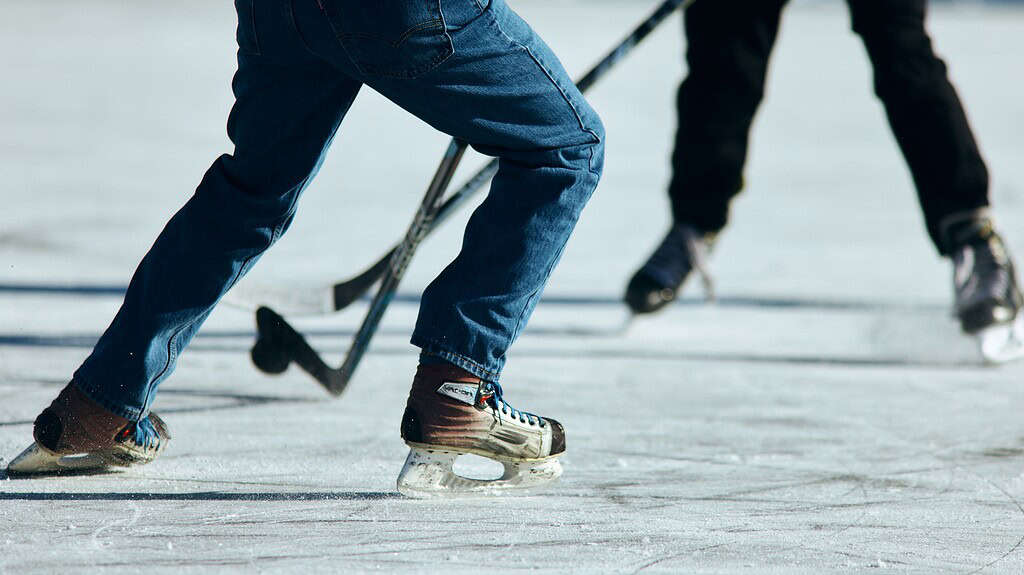
When skating on Maine’s natural ice, what you wear matters as much as where you go. Hockey skates are the most versatile choice for pond hockey and casual sessions, offering durability and control on rough, uneven surfaces. For long glides across frozen lakes, many wild-ice skaters prefer Nordic (long-blade) skates, which clip into Nordic ski boots for warmth, comfort, and efficient glide. Speed skates also perform well for distance, though they require confident balance. Figure skates are best left for rinks—their toe picks and short blades can catch on cracks and ripples in outdoor ice.
Dress for both warmth and mobility. Layer with moisture-wicking base layers, insulated mid-layers and a wind-blocking outer shell. Waterproof gloves, a warm hat or helmet liner, and tall wool socks help keep extremities comfortable on exposed ice. Wearing a helmet is strongly recommended, and some skaters opt for a buoyant pack or lightweight flotation layer for additional security on wild ice.
Experienced skaters venturing onto remote lakes may want to carry ice picks, a throw rope, an emergency heat blanket and dry layers packed in a waterproof dry bag—simple precautions that offer peace of mind and help you look out for yourself and others.
More Outdoor Ice Skating Rinks in Maine
You don’t have to venture onto frozen lakes or ponds to experience the pure joy of skating outdoors in Maine in winter. Across the state, seasonal outdoor rinks offer a safe, accessible way to glide through the crisp air—all while enjoying consistent ice, skate rentals, hot drinks and cozy warming huts.
Jalbert Park Outdoor Rink
Kent
Admission charged, rentals available.
Haley Pond Park Ice Rink
Rangeley
Free admission, free skates.
Warming hut and bonfire available.
Sugarloaf Outdoor Center Ice Rink
Carrabassett Valley
Admission charged, rentals available. Hockey night on NHL-sized rink, Nordic skiing and snowshoeing also available.
Thompson’s Point Rink
Portland
Admission charged (timed and ticked sessions). Rentals and training aids available.
Goddards Pond
Bath
Free admission and skate loaners. Warming hut, ice skate trainer available
Find more outdoor ice skating rinks in Maine.
This story was written and photographed by Cam Held, co-editor of Maine the Way, whose work documents the people, places and details that define life in Maine.