
Meet the Maine Turkey Farmers
When it comes to turkeys, one day usually gets all the attention: Thanksgiving. Jason and Chase Harris of Harris Turkey Farm in West Newfield are out to change that. “Oh yeah, we sell turkeys for Thanksgiving,” Chase says, ladling turkey stew with barley into quart containers, “but the bulk of our business is the items we’re selling out of the farm store the remainder of the year.”

That year-round focus started with a humble Turkey Pot Pie. Chase—formerly a nurse—tested early recipes with co-workers, handing out variations with feedback cards. “They’d leave happy, and I’d have the feedback to tweak my recipe until it was just the way we wanted it,” he says. Today, the farm store carries four pot pie styles: their classic Best Turkey Pot Pie; a Parisian version with green beans and a garlic-white-wine sauce; the southwestern Albuturque; and even a vegetarian pie. Chase also makes several turkey stews, a hearty chili, turkey meatballs and a surprising fan favorite—an ever-rotating lineup of cheesecakes.
“During the pandemic … people wanted good quality food, prepared for them, and they weren’t going to restaurants,” Jason says. “Chase quit his job to cook full-time, well, more than that, I guess…he’s actually here seven days a week for good portions of the year.” As he speaks, two women arrive from an hour north, coolers in hand. “Time to stock up,” one calls out.
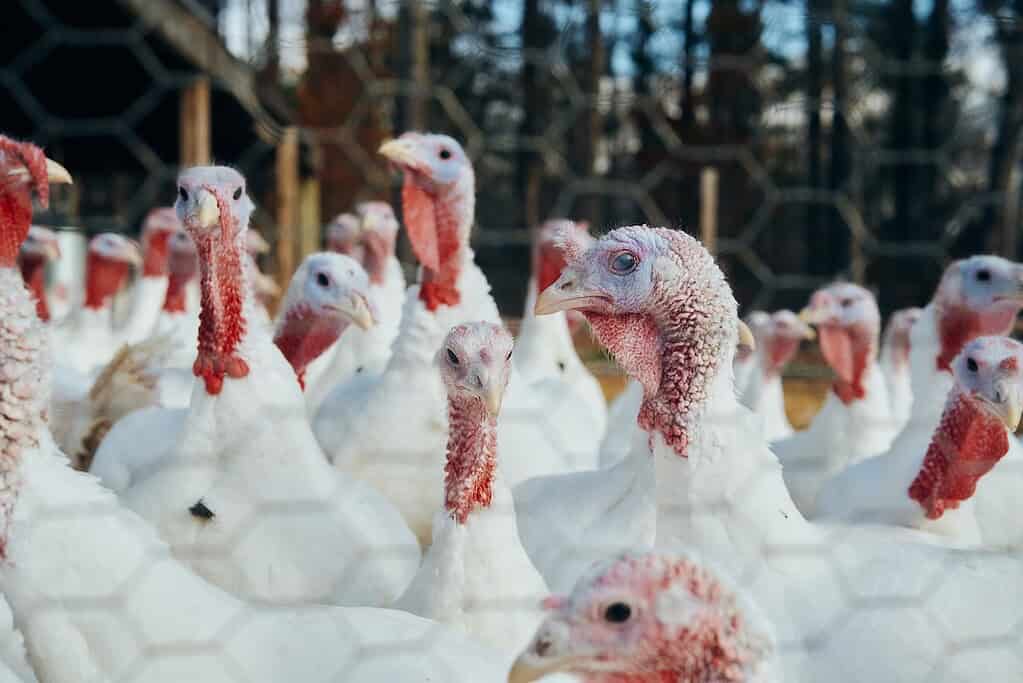
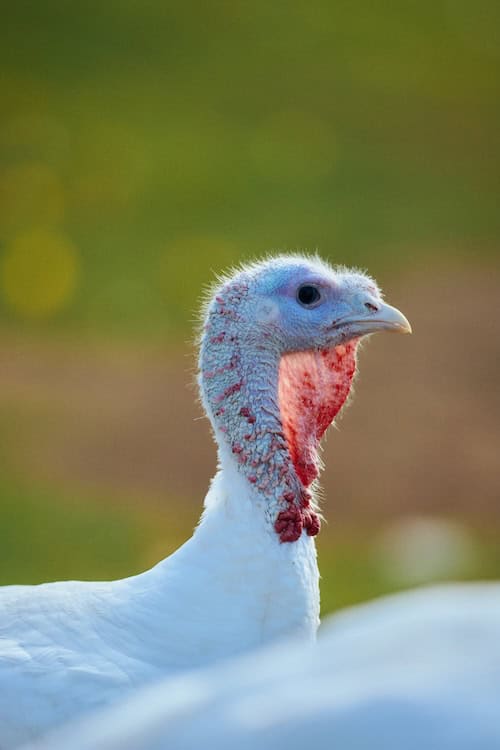
Like many small farms in Maine, Harris Turkey Farm relies on these value-added products to stay viable. “if you’re raising a few hundred turkeys, you can’t sell them wholesale,” Jason explains. “You need tens of thousands of birds to make those margins work.” Their small flock—about 200 birds—lives in rotating pastures behind the shop. Early in the season, those fields are lush and green; by November, the turkeys have scratched them to bare earth.
Before the birds reach those pastures, Jason raises the day-old poults under heat lamps. Once outdoors, they’re still vulnerable. “Our guard dogs scare off most things,” he says, nodding toward distant barking, “but aerial predation is the main concern. Owls at night, and hawks during the day.” To give the poults cover, he plants canola each spring. The dense knee-high growth creates shaded tunnels that hide the young birds from above—until they’re large enough to no longer need it. The canola then becomes forage.
By early November, the hens weigh around 15 pounds, while the Tom turkeys reach 20 to 25. Heritage breeds proved too small—and too agile. “It wasn’t the right thing for us,” Jason laughs. “By the end of the season, they’d only grown to eight or nine pounds, and they were able to fly away.”
A small abattoir (butcher house) sits directly behind the coop, allowing the farm to handle everything on site. It keeps their operation efficient but comes with limitations. “The only problem is that for our small scale we’re certified for the State of Maine, not the USDA, and even though we’re only 10 miles from the New Hampshire border, we can’t sell our products across the state line—they have to come to us.”
Just beyond the shop, an outdoor patio and a Harris Turkey Farm food trailer mark their newest venture: the Tipsy Turkey bar. Every Friday from midsummer through fall, the farm hosts a lively dinner scene. “We’ve had as many as 80 people here at once—every seat was full,” Chase says. The menu features favorites from the farm store along with turkey pesto paninis, turkey meatball subs and hearty farm salads. It has quickly become a place where locals and visitors gather, eat and see firsthand where their food comes from.
“Get to know your farms and farmers,” Chase says. “It is easy to stay removed from your food systems, but I think small farms are realizing those relationships, all those connections, not only help us farmers but give visitors real value too.”

Order Thanksgiving Turkey from a Maine Turkey Farm
Fall in Maine is the perfect time of year to gather with loved ones and enjoy the bounty of harvest season. That means holiday feasting—and lots of turkeys.
One advantage of buying a Thanksgiving turkey from a local farm, beyond the quality of the meat, is being able to pre-order the exact size you want. Harris Turkey Farm opens its Thanksgiving turkey orders on June 1 and sells out fast. Other Maine turkey farms have their own timelines, but most begin taking reservations well ahead of the holiday season. Here are a few to consider.
Tide Mill Organic Farm
This ninth-generation coastal farm in Edmunds raises certified-organic, pasture-grazed turkeys on salt-tinged Maine fields. Birds are processed on-site for full transparency from pasture to plate.
Pine Tree Poultry
Known for free-range turkeys raised on vegetarian grain and pastured barns, this farm in New Sharon also produces chicken and pork. Their on-farm processing and year-round farm store make high-quality poultry available well beyond the holidays.
Greaney’s Turkey Farm
This long-standing family farm in Mercer specializes in free-range Thanksgiving turkeys—simple, traditional and raised with care.
Saco River Farms
Best known for its diversified farm and natural-foods market, Saco River Farms in Steep Falls also offers pasture-raised Maine turkeys available for holiday pre-order.
Orchard Ridge Farm
More than an orchard, this bustling farm market in Gorham offers pre-ordered free-range holiday turkeys alongside U-pick fruit, baked goods, and a well-loved café.
Sunnyside Family Farm
This small Aroostook County farm in Linneus raises all-natural turkeys for the holiday season. Birds are available from Thanksgiving through Christmas, with early reservations encouraged.
Harvest Your Own Wild Turkey
Want to get even closer to your food source? Harvesting your own Thanksgiving turkey is a hands-on way to reconnect with tradition and the landscape itself.
Registered Maine Guides like Twin Maple Outdoors offer turkey-hunting trips that blend skill, stewardship and respect for the land. These guided outings take you into quiet woodlots and rolling fields at daybreak, where you’ll learn how to scout for signs, call birds and move with the rhythm of the season. For many hunters—new and experienced alike—the reward goes far beyond the final harvest. It’s about understanding where your food comes from, honoring the bird and bringing home a meal sourced directly from Maine’s natural places.
This adventure was written and photographed by Maine the Way.