
Recipe: Poached Salmon with Hollandaise
The arrival of The Blue Food Cookbook: Delicious Seafood Recipes for a Sustainable Future adds fresh momentum to the way we think about seafood: how we choose it, cook it and connect it to place. Created alongside the lauded PBS docuseries Hope in the Water by four-time James Beard award-winner Andrew Zimmern and Maine-based seafood and sustainability expert Barton Seaver, the book celebrates seafood that’s both deeply satisfying and responsibly sourced.
Atlantic salmon tells a distinctly Maine seafood story. Once native to rivers throughout the Northeast, wild Atlantic salmon are now protected—with no commercial fishery in the U.S.—which is why every Atlantic salmon sold domestically is farmed. In the United States, that farming happens only in Maine.
Raised in marine net pens in the cold, working waters of Downeast Maine, salmon farming has been part of the coastal fabric for decades, with companies like Cooke Seafood USA helping advance practices that balance innovation with care for the ocean. Today’s aquaculture farms rely on careful monitoring and evolving technology to support fish health and protect surrounding waters. Those efforts are paying off. In 2016, Monterey Bay Aquarium Seafood Watch upgraded its rating for Maine-raised farmed salmon to yellow—a “Good Alternative”—reflecting ongoing progress toward a lighter footprint.
That connection between aquaculture and community is on full display each summer at the fundraising Eastport Salmon Festival, where Maine-raised salmon (donated by Cooke Aquaculture) is grilled and shared under a big tent overlooking Passamaquoddy Bay, with the option to take an educational boat ride out to the salmon pens in nearby Cobscook Bay.
This poached salmon with hollandaise recipe brings that philosophy home: food forged by nature, shaped by thoughtful choices and made irresistibly delicious by expert tastemakers.
Poached Salmon with Hollandaise
“Garnish the platter with a medley of spring vegetables, cooked asparagus, herb sprigs, or all of the above. This is a show-off dish, so show off!”
– Andrew Zimmern
SERVES 6 TO 8
One 2- to 3-pound salmon fillet, skin-off, pin bones removed, tail trimmed off
Salt
3 cups dry white wine
1 onion, chopped (about 1 cup)
3 celery stalks, chopped (about 1 1/2 cups)
1 tablespoon whole black peppercorns
3 parsley sprigs
3 dill sprigs
3 tarragon sprigs
1 recipe No-Fail
Hollandaise (recipe follows)
Season the fish with salt and set it aside.
Make the poaching liquid (court bouillon in French) by combining the wine, onion, celery, peppercorns, parsley, dill, tarragon, and salt to taste in a fish poacher or deep rectangular pan large enough to hold the salmon. Add 3 to 4 inches of water and bring to a boil. Place the salmon fillet on an oiled piece of butcher paper with edges that stick out over the sides of the pan, or on a large piece of cheesecloth. (This is so you can remove the fillet without it breaking if you don’t have the specialized pan called a salmon poacher.) Lower the salmon fillet into the liquid and bring the court bouillon back to a simmer. Lower the heat to maintain the barest simmer possible, cover, and cook gently until the salmon is just cooked through, 12 to 16 minutes, depending on the thickness. Turn off the heat and let the fish rest in the liquid for 2 to 3 minutes.
Lay a towel next to a platter. Using the paper or cheesecloth, remove the fish from the liquid and place on the towel. Dab the fish dry as best as possible. Carefully transfer the salmon to a platter. Garnish with any accoutrements you’d like, such as cucumber slices or herbs and citrus.
Serve the salmon warm with the No-Fail Hollandaise.
No-Fail Hollandaise
MAKE ABOUT 1 ½ CUPS
Juice of 1 lemon (2 to 3 tablespoons)
1 teaspoon dijon mustard
2 tablespoons freshly minced fresh tarragon leaves
1/8 teaspoon cayenne pepper
5 egg yolks
1 cup (2 sticks) butter, cut into 1/4 -inch pieces
Salt
Set up a pot of gently simmering water over which you can rest a stainless-steel bowl. In that bowl, whisk together 11/2 tablespoons water, the lemon juice, mustard, tarragon, cayenne, and egg yolks until thickened, 2 to 3 minutes. Whisk continuously, removing the pan from the heat source briefly if it gets too hot. Add the butter, whisking constantly until the butter is fully incorporated, about 2 minutes. Season with salt. Whisk over the heat to make sure the sauce is warm. Your yolks are already cooked and stabilized!
If the sauce is too thick, whisk in warm water, 1 teaspoon or so at a time, until the sauce is just pourable.
This sauce can be made ahead by about an hour if kept stored in a plastic quart container in a pot of hot water. You can store leftovers in an airtight container in the refrigerator for up to a week and reheat in a double boiler over low heat.
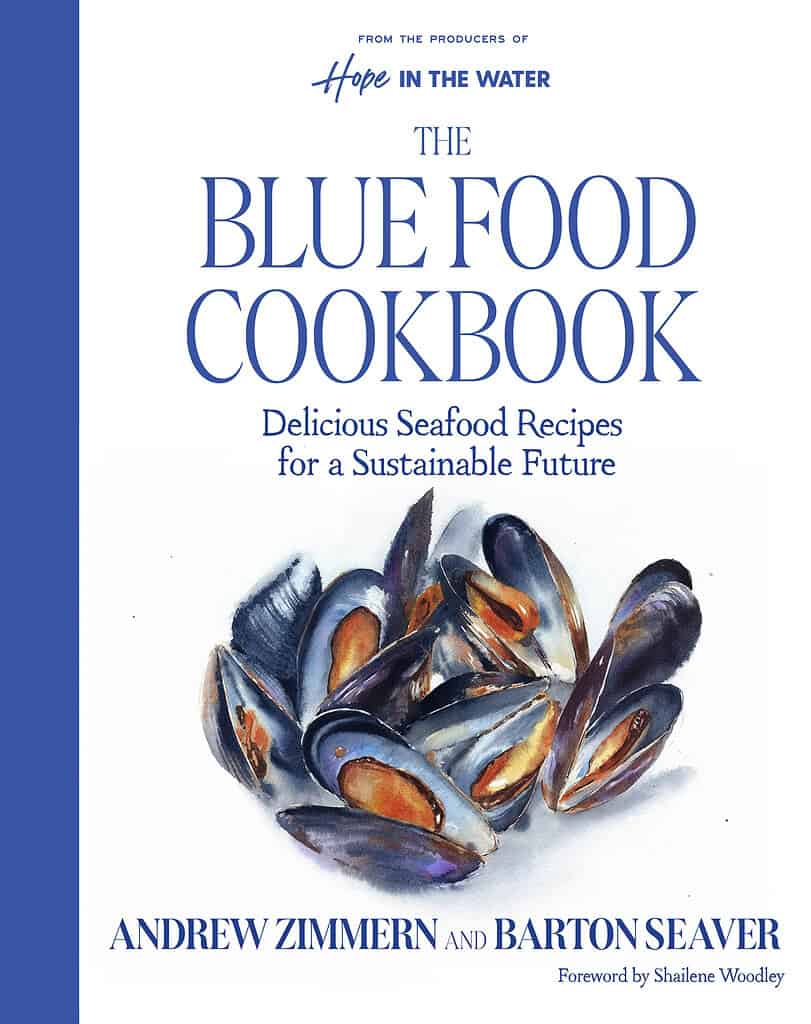
Excerpted from the book THE BLUE FOOD COOKBOOK, provided courtesy of Harvest, an imprint of HarperCollins Publishers. Copyright © 2025 by Fed By Blue. Photography by Eric Wolfinger. Reprinted by permission.