A River Runs Silver
Where to See Maine’s Incredible Alewife Migration
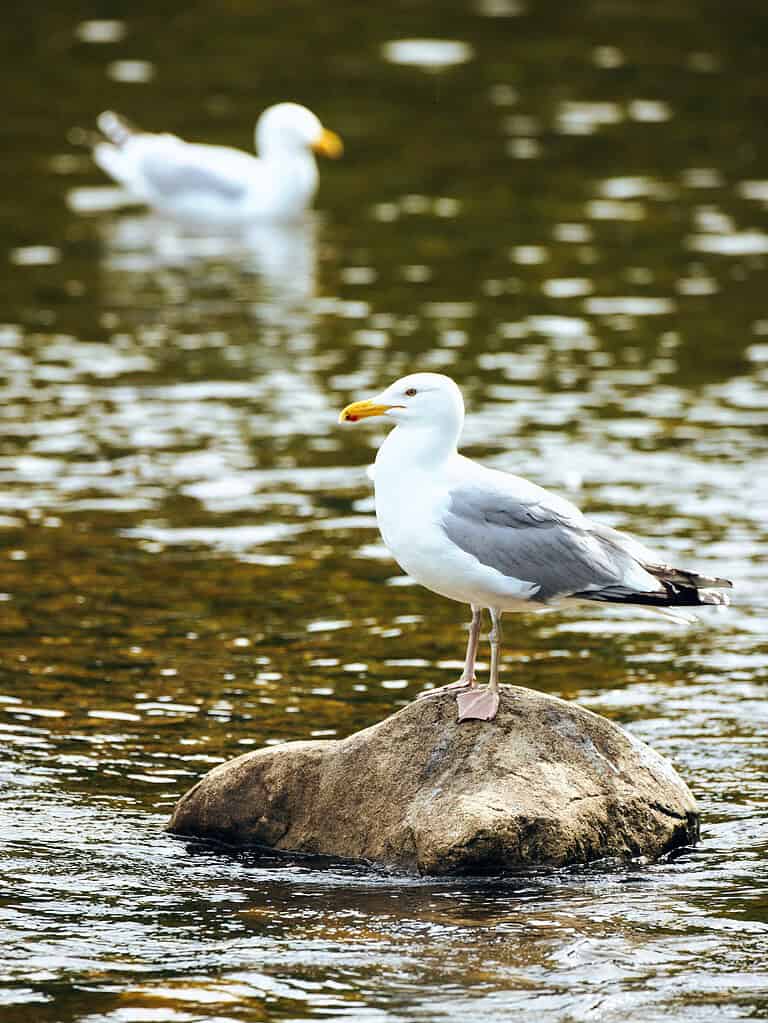
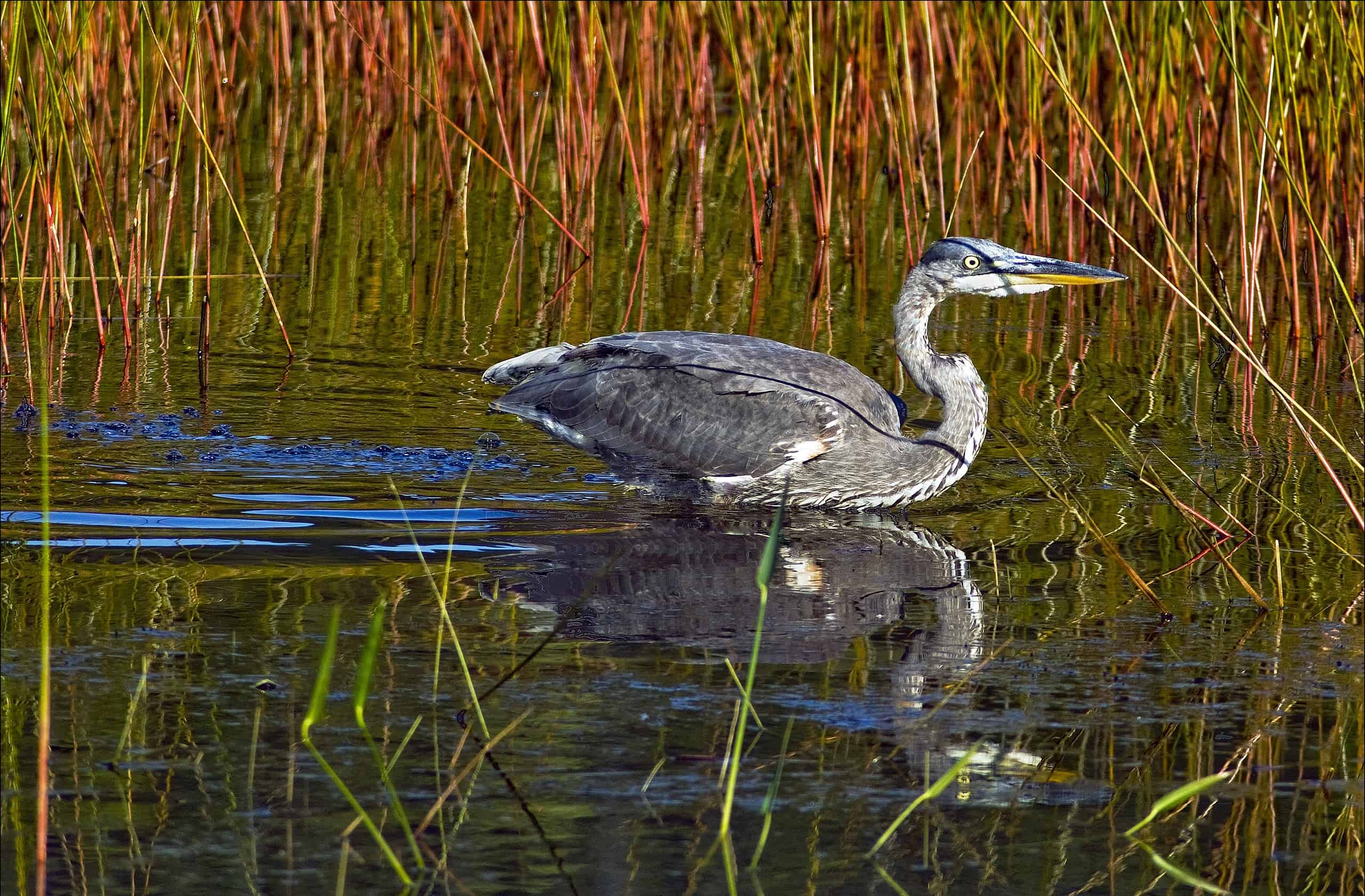
The osprey sees them first. From a hundred feet up, it folds its wings and drops—a clean, committed dive that ends in a percussive splash 30 feet downstream from the bridge. It comes up empty-taloned but unfazed and circles back to scan again. A gull peels off to harass it. A great blue heron stalks the shallows on the far bank, picking its way along the edge of the current with the deliberation of someone walking on ice. And then, beneath them all, the river bottom moves.
What initially may have looked like gravel is, in fact, a school of alewives so dense it has erased the stream bed entirely—tens of thousands of fish, gill to gill, tail to head, their dark backs forming a single slow-moving carpet from one bank to the other. When a cormorant flashes through, the water parts around it like a zipper unzipping, then seals shut again. The birds, it turns out, are the easiest way to find the fish. Wherever the alewives are running thickest, the sky and shoreline assemble themselves into a kind of signpost.
This is the great spectacle of spring in Maine that most people drive past without noticing. Each May, river herring—the alewives and their close cousins, the blueback herring—return from the North Atlantic by the millions, pushing up coastal streams to spawn in the freshwater lakes and ponds where they were born. They are anadromous fish, born in fresh water, grown to maturity at sea, and then drawn back to the exact pond of their hatching by a precise sense of smell. The runs generally begin in early May and taper off by mid-June, timed to water temperature and river flow.
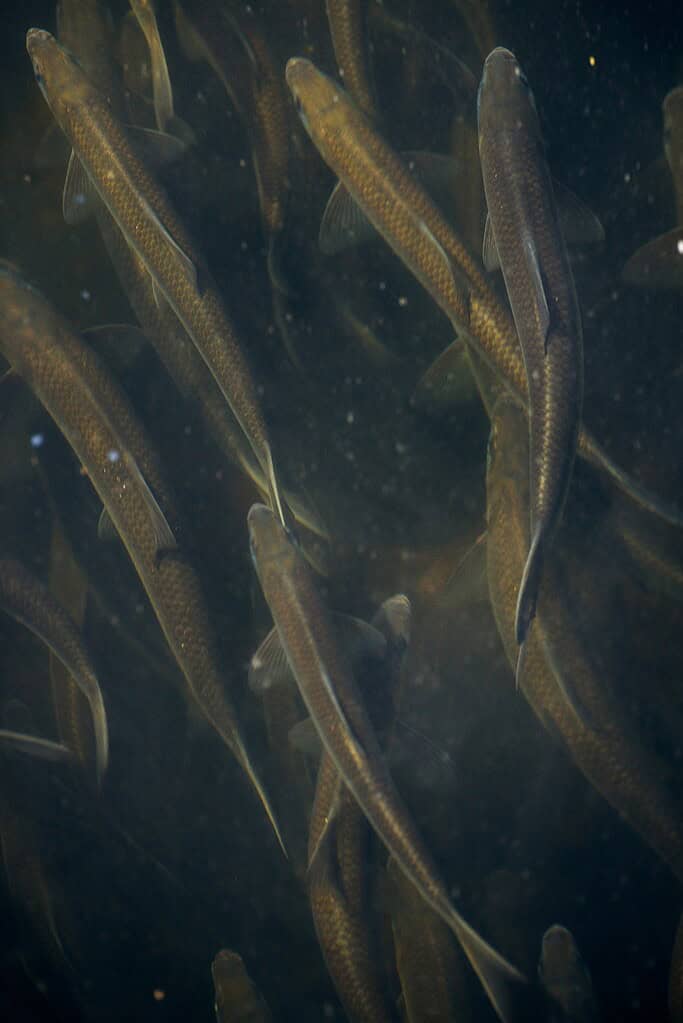
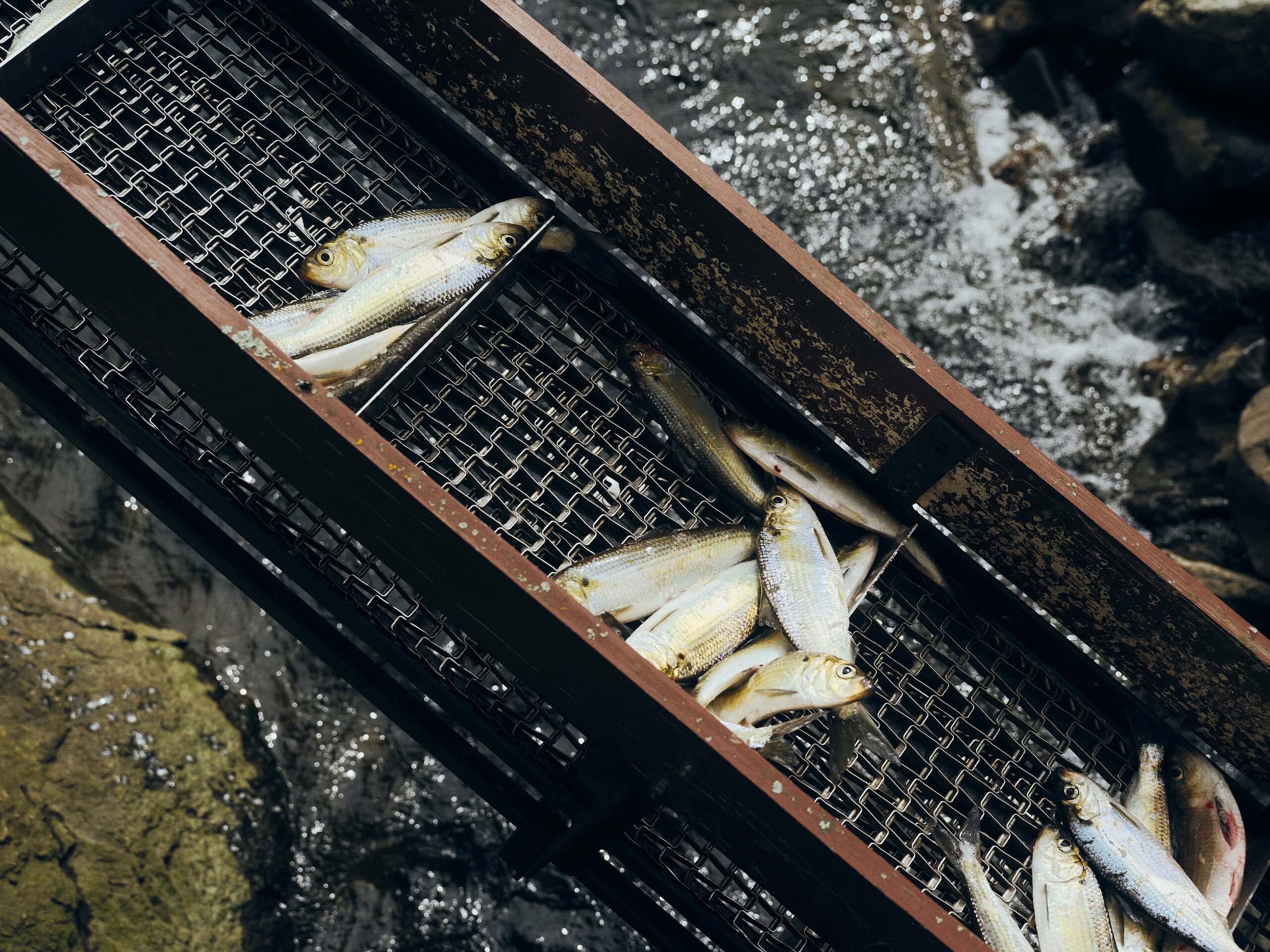
The fish themselves are unspectacular at a glance: silver-sided, dark-backed, about a foot in length. What’s spectacular is the volume. On the Sebasticook River in Benton, where the removal of the Edwards and Fort Halifax dams reopened a path to spawning grounds, the run has grown from a few hundred thousand fish in the late ‘90s to more than 6 million in recent years—currently the largest alewife run in the country. The Damariscotta Mills ladder regularly counts over a million. The Bagaduce, which in 2021, became the first watershed in Maine to be fully restored for fish passage, is filling back in, run by run.
It’s a paradise for birding in Maine. Birds of all kinds see this as a movable feast on a scale almost nothing else in the Maine calendar can match. Bald eagles gather at the choke points—the dams, the fish ladders, the narrow runs—sometimes by the dozens. The Department of Marine Resources has reported that the stretch of lower Sebasticook between Winslow and Benton Falls hosts one of the highest concentrations of bald eagles anywhere in the contiguous U.S. states during the run. Ospreys hunt the open water and then run a gauntlet of their own: a successful catch often draws a gull or an eagle bent on stealing it mid-flight, and the resulting aerial chases are some of the best wildlife theater the state offers. Great blue herons stalk the shallows. Cormorants work below the surface, sometimes for a full minute at a time. Mergansers and gulls pick at whatever the bigger birds leave behind.
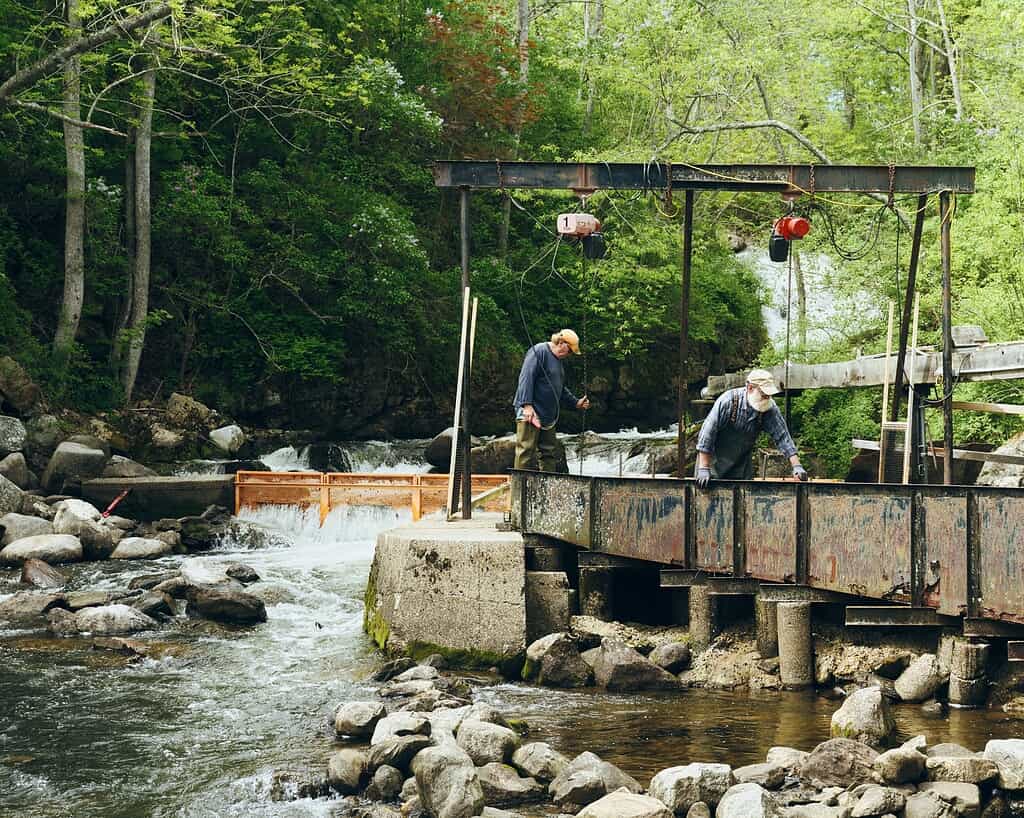
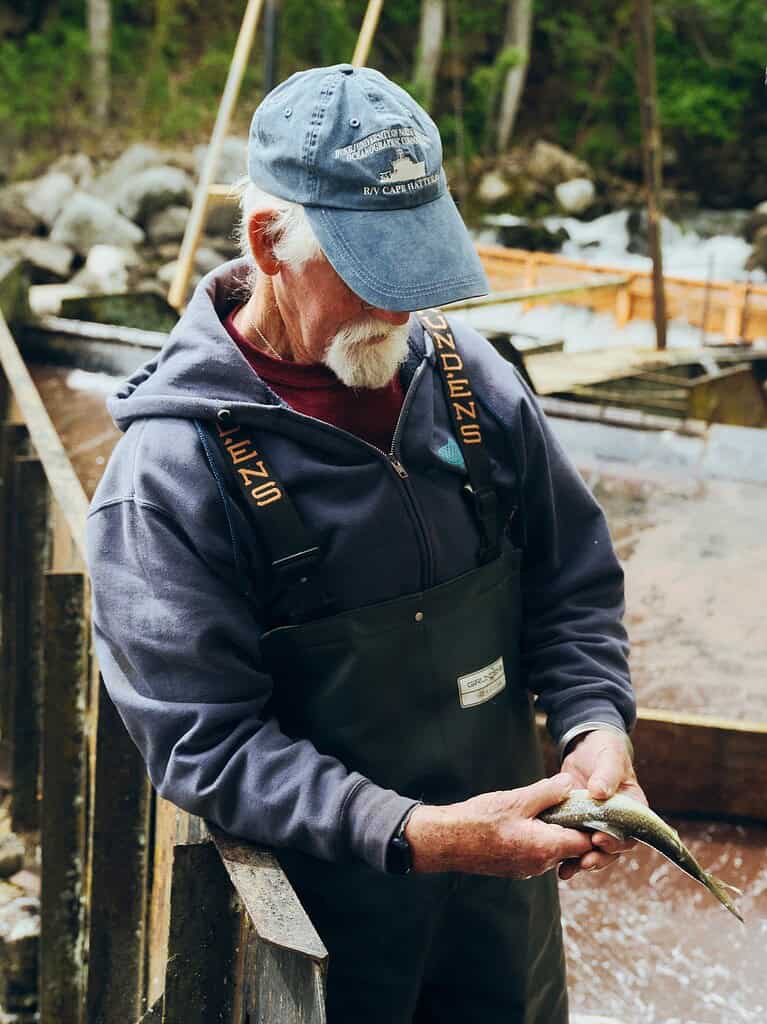
Fishermen are drawn to this migration, too—less for direct sustenance these days (although some alewives are smoked), but for bait. In 19 of Maine’s coastal towns, a commercial alewife harvest still operates each spring, much of it run by municipalities and volunteer fish commissions. Wardens shovel silver from holding pens into crates; the catch goes mostly to lobstermen as bait (helpful for keeping Maine’s restaurants teeming with its iconic lobster rolls). Proceeds in towns like Damariscotta Mills and Nequasset are put back into the fish ladders themselves.
Alewives are a keystone species, a single thread that, when pulled, tightens the whole coastal food web. Striped bass and bluefish chase them in the estuaries. Cod and haddock feed on them offshore. The young, on their fall return to the ocean, feed nearly everything with fins or feathers between the lake and the open Gulf. To watch a run is to watch the Gulf of Maine being fed, in real time, by a river.
Find a fishway with a viewing platform, and bring binoculars. The birds will show you where to look. You can’t miss them.
Alewife Viewing Spots
Damariscotta Mills Fish Ladder, Nobleboro/Newcastle
The most accessible and photogenic run in Maine, a 69-pool stone ladder built into a steep granite gorge connects the tidal river to Damariscotta Lake. Boardwalks and viewing platforms run much of the length of the climb, and the alewives are sometimes so thick that their backs poke above the surface. Ospreys, eagles and gulls all frequent the falls. The annual Alewife Festival in late May is the showpiece of the season.
Nequasset Fish Ladder, Woolwich
A rebuilt ladder at the outlet of Nequasset Lake, just off Route 1, it ranks among the top five commercial alewife runs in Maine. Volunteer fish counters work the ladder through the run, and the harvest shack sells smoked alewives during the season. Ospreys and eagles are nearly always overhead.
Benton Falls, Sebasticook River, Benton
For sheer abundance, this is the run. Millions of fish ascend the fish lift at the dam each spring, and the half-mile of river just below the dam has become one of the great raptor-viewing stretches in the Northeast—dozens of eagles is not an unusual report. The viewing distance from the dam is greater than at most ladders, so a long lens or good binoculars help. The Benton Alewife Festival in mid-May is timed to the peak.
Mill Brook Preserve, Westbrook
The largest fish migration draining into Casco Bay, this spot is just minutes from Portland. The Presumpscot Regional Land Trust has built two viewing pools along a hiking trail through a forested valley, and partners with the Gulf of Maine Research Institute to host guided walks and a long-running volunteer fish count. The trails are steep—solid footwear required—and the trust offers a free downloadable viewing guide.
Outlet Stream, Vassalboro
Thanks to restoration efforts that reopened this historic route, Outlet Stream comes alive every spring as hundreds of thousands of alewives surge upstream on their annual migration from the ocean to China Lake, a 3,850-acre freshwater lake that provides some of the most important alewife spawning habitat in the state.
Orland River Fish Ladder, Orland
A short, dramatic run at the head of tide on the Orland River, with a working commercial harvest beside the ladder, the site is small enough to take in at a glance and reliably busy with eagles and ospreys. Saturdays during the run often bring biologists on hand to talk fish.
Pierce Pond Fishway, Bagaduce Watershed, Penobscot
This is the first stop in Maine’s first fully restored watershed. A nature-like fishway of stone weirs replaced the old concrete structure, and a viewing platform and picnic area overlook the run. Bald eagles line the marsh waiting for a fresh silvery meal. The annual Bagaduce River Alewife Celebration is held here in late May.
Skutik (St. Croix) River, Sipayik to Forest City
The Passamaquoddy homeland and the most ambitious restoration project in the state, this represents a sweeping, multi-agency effort to reopen what was once a migratory highway for tens of millions of alewives. Run counts at Grand Falls are climbing fast. The Skutik River Alewife Run, an 80-mile relay organized by Wabanaki REACH and the Schoodic Riverkeepers, traces the fish’s route in late May and is one of the most moving ways to encounter this migration anywhere in Maine.
This story was written and photographed by Cam Held, co-editor of Maine the Way, whose work documents the people, places and details that define life in Maine.
Related Content
Maine’s MidCoast & Islands Birding Trail
Trip Tip: Hirundo Wildlife Refuge
Birding in Acadia National Park
Puffin Watch – Rockland, New Harbor
Maine’s Lakes and Mountains Birding Trail
Trip Tip: Thorncrag Bird Sanctuary

Things to do in Bangor, Maine with Kids
Maine’s Watchable Wildlife